
Chargebacks have become one of the biggest threats to ecommerce profitability. Whether you sell through Shopify, WooCommerce, Amazon, Flipkart, Meesho, Myntra, AJIO, or your own D2C website, every dispute can result in lost revenue, additional fees, and increased pressure from payment processors.
Many sellers believe that enabling fraud protection at checkout is enough to prevent chargebacks. While tools such as 3D Secure (3DS), AVS verification, CVV checks, and payment fraud detection are important, they only address one part of the problem.
The biggest losses often occur after an order has been shipped.
This is where ClaimVMS provides an additional layer of protection by helping sellers collect visual dispatch evidence that can be used during dispute resolution.
The Biggest Misconception About Chargeback Prevention
Most ecommerce guides focus almost entirely on preventing payment fraud.
Typical recommendations include:
- Enable 3DS authentication
- Verify billing addresses
- Use CVV validation
- Install fraud detection tools
- Block high-risk transactions
- Monitor chargeback ratios
These practices are valuable because they help prevent unauthorized transactions.
However, they cannot stop disputes where genuine customers later claim:
- The parcel never arrived.
- The wrong product was delivered.
- The item was damaged.
- The product didn’t match the description.
- The package arrived empty.
By the time these disputes occur, payment verification has already been completed successfully.
The issue is no longer payment fraud—it’s a dispute over fulfillment.
Understanding the Two Layers of Chargeback Protection
Modern ecommerce businesses should think about chargeback prevention in two separate stages.
The first stage protects the payment.
The second stage protects the shipment.
Businesses that implement both layers generally have stronger dispute management processes than those relying only on checkout security.
Layer 1: Prevent Fraud Before Payment
The first layer focuses on stopping fraudulent transactions before an order is approved.
Common technologies include:
- 3D Secure authentication
- Address Verification System (AVS)
- CVV validation
- Device fingerprinting
- AI fraud detection
- Risk scoring
- Payment gateway security
- Customer verification
These systems identify suspicious transactions before products are dispatched.
They are highly effective against stolen cards, fake identities, and account takeover attempts.
Layer 2: Protect Yourself After the Order Ships
Once an order leaves the warehouse, the nature of risk changes.
Instead of preventing fraud at checkout, sellers now need to prove exactly what happened during fulfillment.
This includes:
- Which product was packed
- Which SKU was scanned
- Parcel condition before sealing
- Packaging process
- Dispatch confirmation
- Shipping label verification
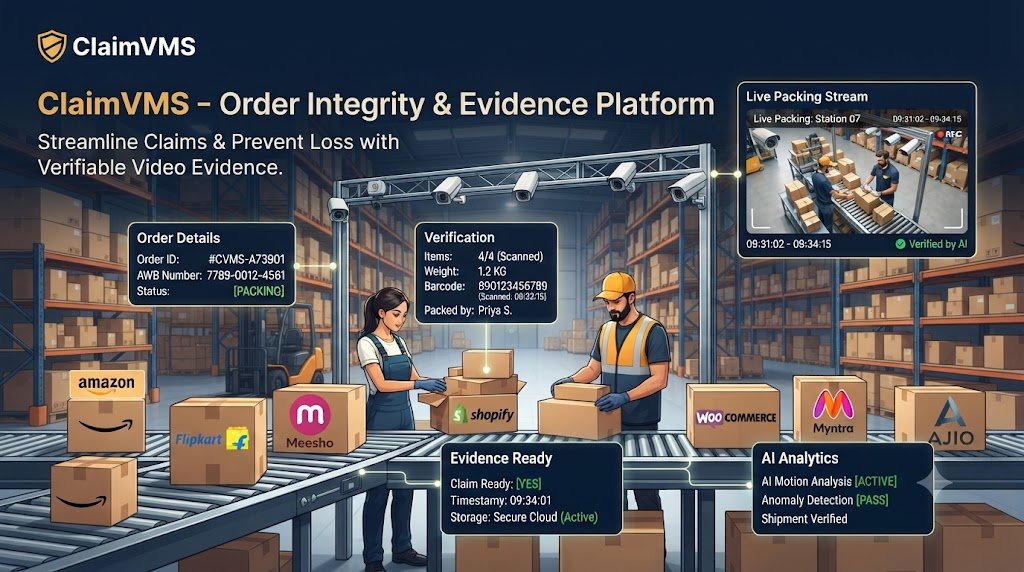
ClaimVMS creates this evidence automatically by recording and indexing every packing process.
Instead of depending solely on invoices and courier tracking, sellers have visual proof of the actual shipment.
Why Many Genuine Sellers Still Lose Chargebacks
Many businesses assume that if they have:
- Order invoices
- Courier tracking
- Product listings
- Shipping confirmation
- Customer communication
they have enough evidence to defend themselves.
Unfortunately, these documents rarely answer the most important question investigators ask:
“What exactly was packed inside this customer’s parcel?”
Invoices show what was ordered.
Tracking shows the parcel moved through the courier network.
Product pages show what your business sells.
None of these independently verify what was placed inside the box before dispatch.
That missing evidence often decides the outcome of a dispute.
Why Post-Dispatch Fraud Is Growing
As ecommerce continues to expand, dishonest buyers have become increasingly sophisticated.
Common fraud patterns now include:
- False delivery claims
- Empty box allegations
- Wrong item complaints
- Item Not as Described (SNAD) disputes
- Product swapping
- Wardrobing
- Return abuse
- Friendly fraud
Because these disputes occur after delivery, traditional payment fraud tools cannot prevent them.
Businesses need operational evidence from the fulfillment process itself.
How ClaimVMS Strengthens Your Dispute Defense
ClaimVMS is designed to help ecommerce sellers capture and retrieve shipment evidence quickly.
The platform automatically links each packing session with:
- Order ID
- AWB Number
- Invoice Number
- Barcode
- QR Code
- Dispatch timestamp
When a dispute is raised, warehouse teams can instantly locate the exact packing video instead of manually reviewing hours of CCTV footage.
This dramatically reduces response time while improving the quality of evidence submitted to marketplaces and payment providers.
A Practical Example
Consider an online electronics seller fulfilling hundreds of orders every day.
Despite using secure payment gateways and fraud detection software, the business continues receiving disputes claiming:
- Wrong mobile phone model delivered
- Incorrect storage capacity
- Missing accessories
- Empty parcel
- Damaged product
Initially, the seller submits:
- Product listings
- GST invoice
- Courier tracking
- Shipping confirmation
Yet many claims are still rejected because none of these documents prove the contents of the parcel during packing.
After implementing ClaimVMS, every order is recorded and linked to its Order ID.
When another dispute arises, the warehouse team retrieves the exact packing video showing:
- Correct product selection
- Barcode verification
- Accessory placement
- Secure packaging
- Parcel sealing
- Shipping label attachment
Instead of relying on assumptions, the seller submits visual evidence that directly supports the fulfillment process.
Why Traditional CCTV Systems Are Not Enough
Most warehouses already have surveillance cameras.
The problem isn’t recording footage.
The problem is finding the correct recording when you need it.
Traditional CCTV systems usually organize videos by:
- Camera number
- Date
- Time
Finding one packing event can require hours of manual searching.
ClaimVMS transforms warehouse CCTV into an intelligent evidence management system by automatically indexing recordings with Order IDs and shipment details.
Instead of searching by time, users simply search using the customer’s order information and retrieve the relevant video within seconds.
The Competitive Advantage of Order-Linked Packing Videos
Modern ecommerce isn’t just about shipping products quickly.
It’s about proving that every shipment was fulfilled correctly.
Order-linked packing videos provide sellers with:
- Greater transparency
- Faster dispute response
- Improved warehouse accountability
- Better operational visibility
- Reduced fraudulent claims
- Stronger customer trust
As marketplaces continue tightening seller performance standards, businesses that maintain verifiable dispatch records will be better positioned to defend themselves against costly chargebacks and return fraud.
Different Chargeback Types Require Different Evidence
One of the biggest mistakes ecommerce sellers make is submitting the same documents for every dispute.
Not every chargeback is investigated the same way.
Each dispute has its own reason code, and each reason code requires different supporting evidence.
For example:
Item Not Received (INR): Investigators need proof that the shipment reached the customer.
Item Not as Described (SNAD): They need proof that the dispatched product matched the listing.
Wrong Item Received: They want evidence that the correct SKU was packed.
Damaged Product Claims: They need proof of the product’s condition before dispatch.
Unauthorized Transactions: They require payment verification and customer authentication records.
Understanding the dispute reason before submitting evidence greatly improves the chances of a successful outcome.
What Evidence Should Sellers Submit?
A strong dispute response combines multiple types of evidence instead of relying on a single document.
An ideal evidence package includes:
Order-linked packing video
Product listing at the time of purchase
Invoice and order confirmation
Courier tracking information
Shipping label details
Barcode or QR scan records
Customer communication
Return inspection photographs (if applicable)
Each document supports a different part of your case and creates a complete picture of the fulfillment process.
Why Packing Videos Have Become Essential
Invoices prove what the customer purchased.
Courier tracking proves the parcel moved through the logistics network.
Product listings explain what you intended to sell.
Only a packing video shows what actually left your warehouse.
A properly recorded packing video can verify:
Correct SKU selection
Product colour
Size or model
Quantity packed
Accessories included
Packaging quality
Parcel sealing
Shipping label attachment
Because this evidence is recorded before the parcel leaves the warehouse, it becomes one of the strongest tools available when handling post-dispatch disputes.
How ClaimVMS Simplifies Evidence Management
Many warehouses already record CCTV footage, but manually reviewing hours of recordings wastes valuable time.
ClaimVMS transforms ordinary surveillance footage into searchable shipment evidence.
The platform automatically links each recording with:
Order ID
AWB Number
Invoice Number
Dispatch Date
Barcode
QR Code
Warehouse teams can search for a shipment using the order details instead of manually checking camera timelines.
This allows businesses to retrieve evidence within seconds, even months after the order was dispatched.
Best Practices for Reducing Ecommerce Chargebacks
Preventing disputes requires consistent warehouse processes as much as payment security.
Successful ecommerce businesses typically follow these practices:
Verify every SKU before packing.
Scan barcodes during fulfillment.
Record every packing station.
Seal parcels within camera view.
Maintain accurate product listings.
Preserve courier and shipping records.
Respond to disputes immediately.
Archive packing videos securely.
Train warehouse staff on standard operating procedures.
Periodically audit fulfillment quality.
These practices reduce operational mistakes while strengthening dispute responses.
Why Fast Evidence Retrieval Matters
Most marketplaces and payment providers enforce strict deadlines for responding to disputes.
If evidence cannot be gathered quickly, sellers may lose the case regardless of its quality.
ClaimVMS enables warehouse teams to:
Search videos by Order ID.
Retrieve recordings instantly.
Export dispute-ready evidence.
Share videos securely.
Maintain a structured evidence archive.
This significantly reduces the time required to prepare professional dispute responses.
Building a Strong Representment Package
A well-organized representment package is easier for investigators to review.
An effective submission should contain:
A short rebuttal explaining why the dispute is incorrect.
Clearly labelled supporting documents.
Packing video as primary evidence.
Invoice and shipping documents.
Product listing screenshots.
Relevant customer communication.
Avoid sending unnecessary files or lengthy explanations.
Instead, provide concise evidence that directly addresses the customer’s claim.
How ClaimVMS Supports Ecommerce Businesses
ClaimVMS is designed specifically for ecommerce operations where shipment verification is critical.
The platform helps businesses:
Record every packing session.
Link videos with Order IDs.
Search recordings instantly.
Export evidence for disputes.
Improve warehouse accountability.
Reduce manual CCTV review.
Support marketplace claims.
Strengthen fraud prevention strategies.
Whether you process hundreds or thousands of orders each day, having structured dispatch evidence can significantly improve operational confidence.
Final Thoughts
Chargebacks are no longer limited to payment fraud.
Today’s ecommerce sellers face increasing numbers of disputes related to fulfillment, delivery, product condition, and return fraud.
Traditional checkout security tools remain important, but they cannot explain what happened after an order was packed.
That is why dispatch verification has become an essential part of modern ecommerce operations.
By combining secure payment processes with searchable packing videos and structured evidence management, businesses can respond to disputes more effectively while protecting revenue and improving customer confidence.
ClaimVMS helps bridge this gap by turning warehouse operations into a reliable source of verifiable evidence whenever a dispute arises.
Frequently Asked Questions
What causes most ecommerce chargebacks today?
Many disputes now occur after products are shipped, including “Item Not Received,” “Item Not as Described,” wrong item, damaged product, and return fraud claims.
Is courier tracking enough to win a dispute?
Courier tracking confirms shipment movement and delivery, but it cannot prove what was inside the parcel. Packing videos provide stronger order-level evidence.
Why are packing videos important?
Packing videos verify the actual fulfillment process, including SKU selection, packaging, and parcel sealing, making them valuable evidence during dispute investigations.
Can ClaimVMS work with existing warehouse CCTV cameras?
Yes. ClaimVMS is designed to integrate with compatible CCTV infrastructure and convert ordinary surveillance recordings into searchable, order-linked evidence.
Which ecommerce platforms can benefit from ClaimVMS?
ClaimVMS can support sellers operating on Amazon, Flipkart, Meesho, Myntra, AJIO, Shopify, WooCommerce, Magento, and other ecommerce platforms.
How quickly can evidence be retrieved?
Because videos are indexed using Order IDs, AWB numbers, and shipment details, evidence can typically be located within seconds instead of manually reviewing hours of CCTV footage.